

Why You Should Provide a Custom Summary and How to Do it
-
1
Default Settings: A Missed Opportunity
By default, if the Summary field is left blank, an excerpt is taken from the beginning of the Page Content. Roughly the first one or two sentences is used. This default setting ensures that a description is provided in search engine results.
However, the first sentence may not be an effective, succinct description to drive traffic to your website. Digital Commons Support recommends that you provide a deliberate description for every new page you create as a best practice.

Above: An empty Summary field on a Digital Commons web page. -
2
Where the Summary Appears
For many Content Types, the Summary does not display on the page and is only provided to users via search engine results. However, the Summary may also appear on both the page and on the Default View for:
AccordionEditing
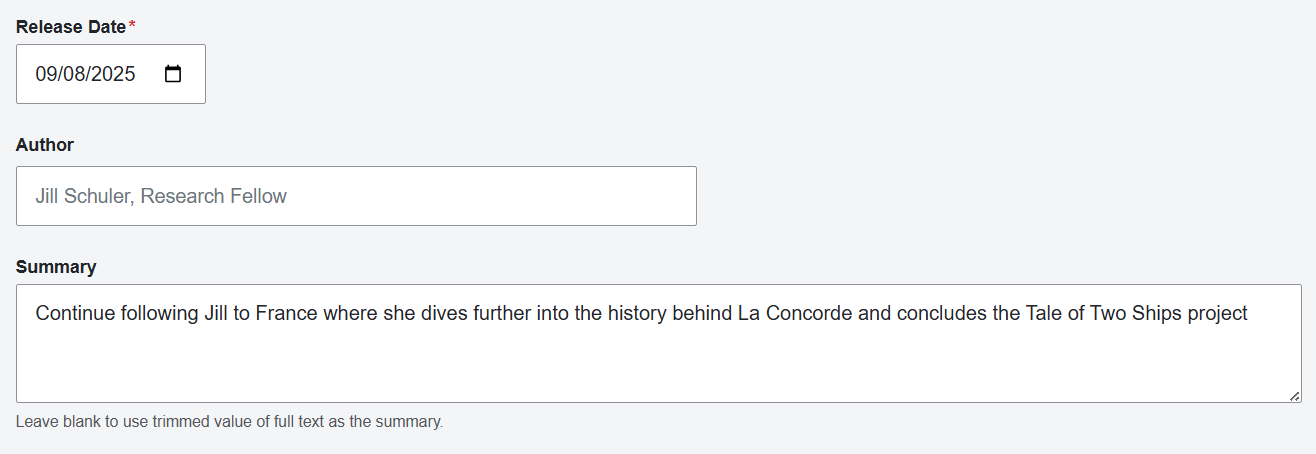
The Summary field for this Blog Entry reads: "Continue following Jill to France where she dives further into the history behind La Concorde and concludes the Tale of Two Ships project." Search Results
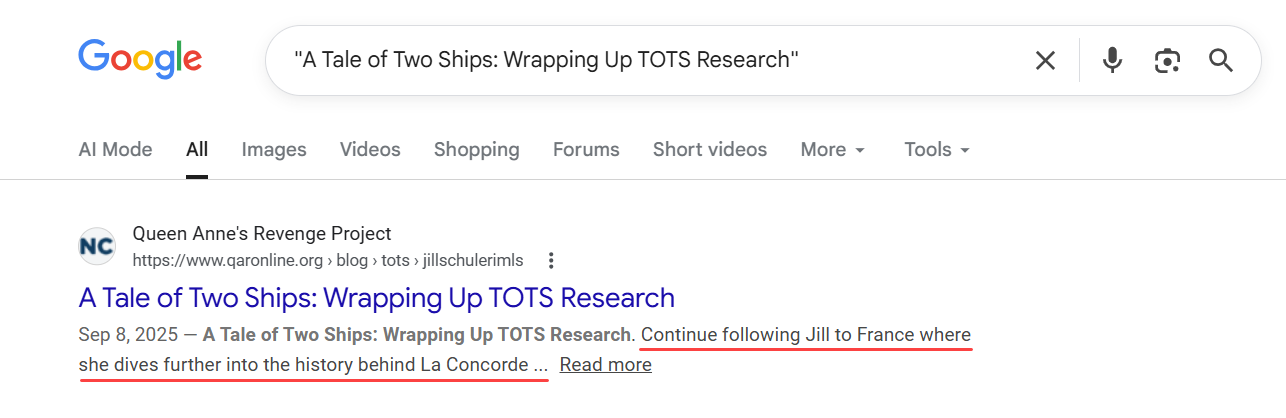
Underlined in Red: The deliberate description provided in the Summary field displays in the search engine results. Blog Entry List View
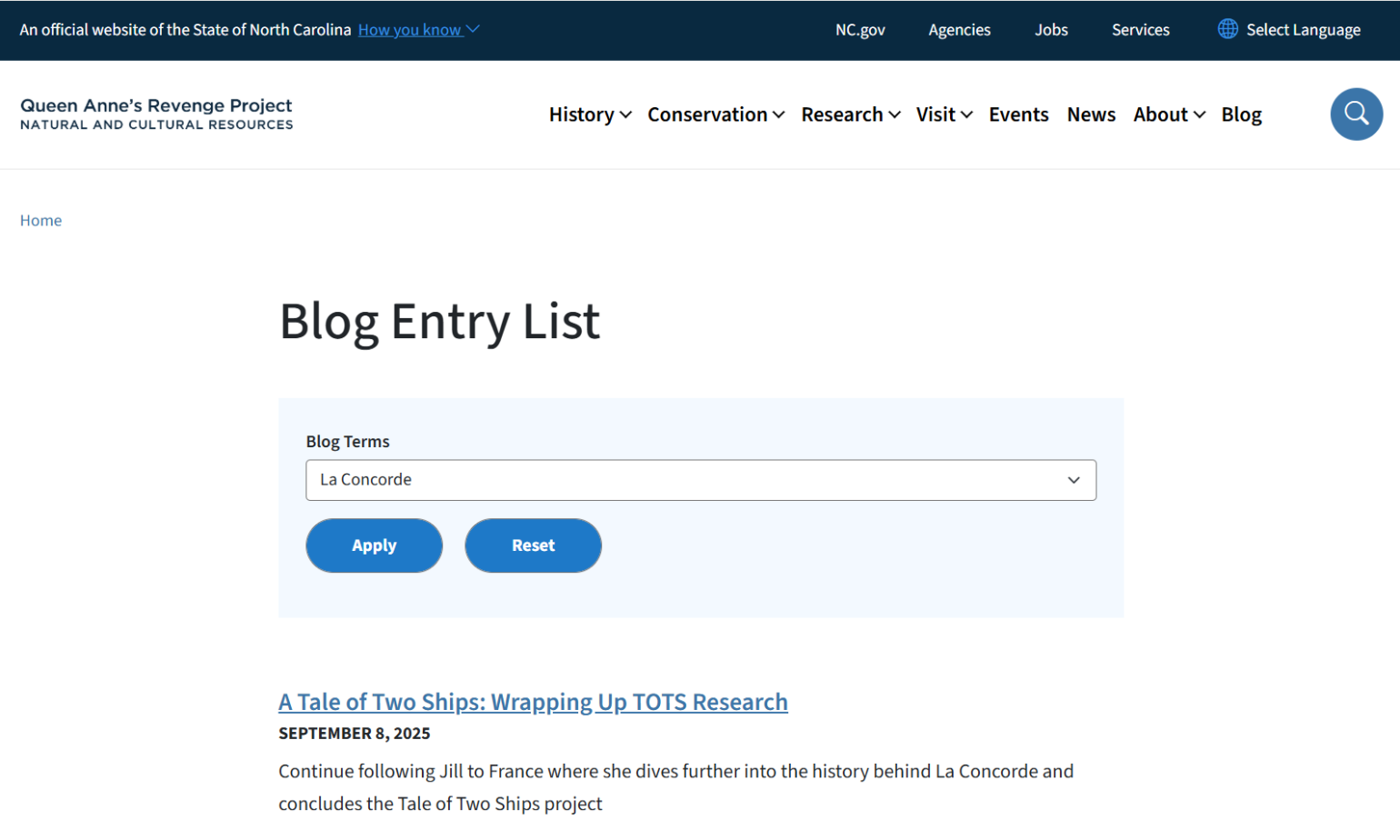
Digital Commons Default Views: The Default Blog Entry List View displays the deliberate Summary provided beneath the title and link to the Blog Entry. Public Experience
Example: A Tale of Two Ships: Wrapping up TOTS Research

If there were no deliberate description provided in the Summary field, search results would display: "The “Tale of Two Ships” project aims to learn more about the history of La Concorde, the French slave ship that would become Blackbeard’s flag..." Editing
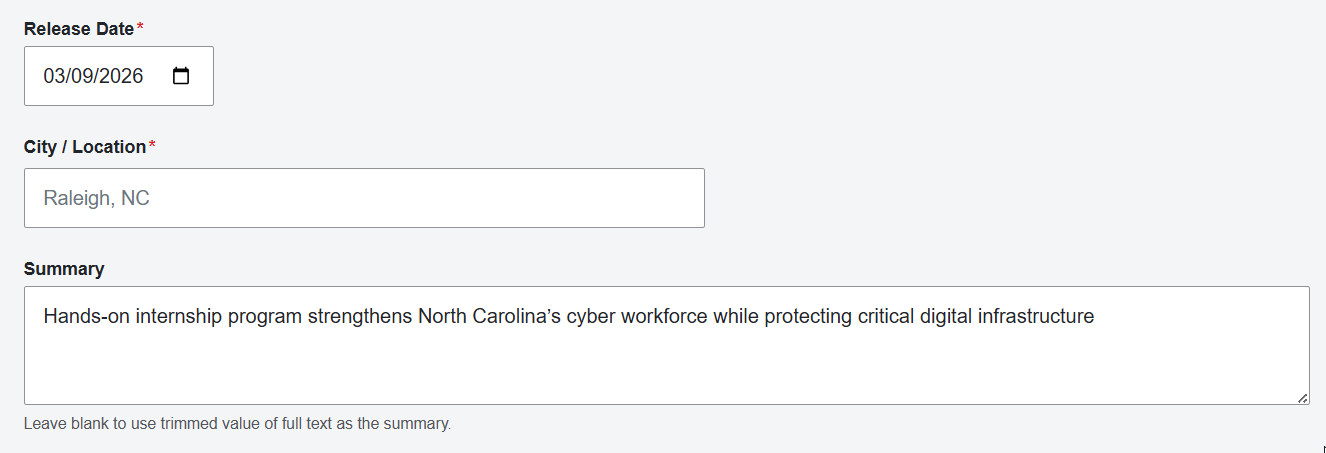
The Summary field for this Press Release reads: "Hands-on internship program strengthens North Carolina's cyber workforce while protecting critical digital infrastructure." Search Results
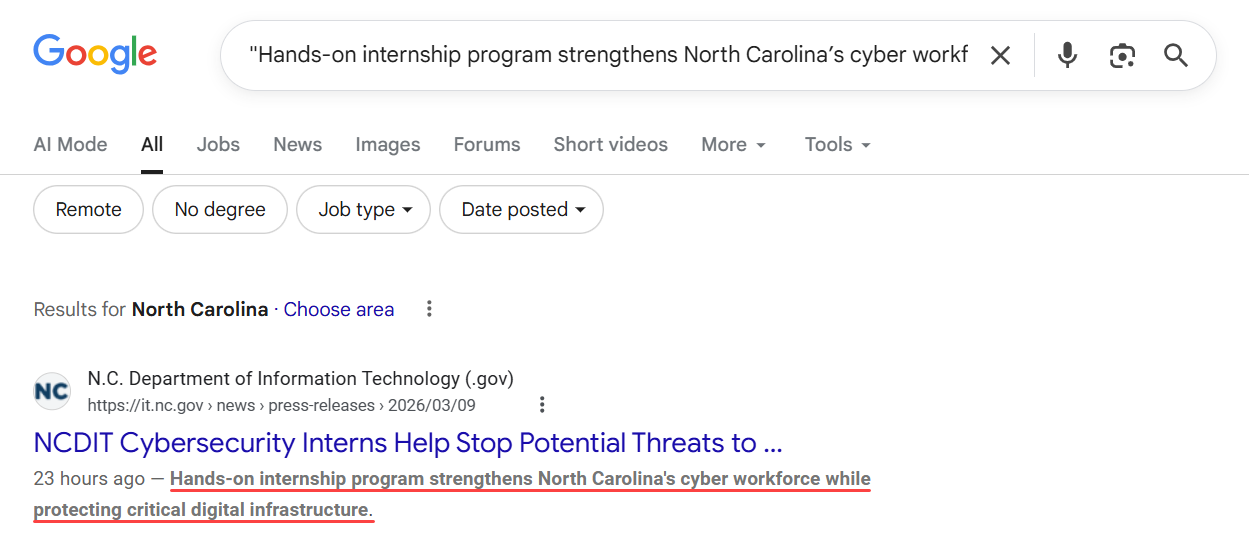
Underlined in Red: The deliberate description provided in the Summary field displays in the search engine results. Public Experience
Example: NCDIT Cybersecurity Interns Help Stop Potential Threats to State Systems

If there were no deliberate description provided in the Summary field, search results would display: "Two cybersecurity interns with the N.C. Department of Information Technology (NCDIT) are already helping..." -
3
Enter Text into the Summary Field
- Enter text into the Summary field to display a deliberate description in search engine results rather than the default excerpt description.
- As a best practice, aim for a descriptive summary between 50 to 160 characters.
- Our website quality scanning tool, DubBot, flags pages with missing, too short, or too long summary descriptions. Learn about DubBot SEO Checks.
AccordionEditing
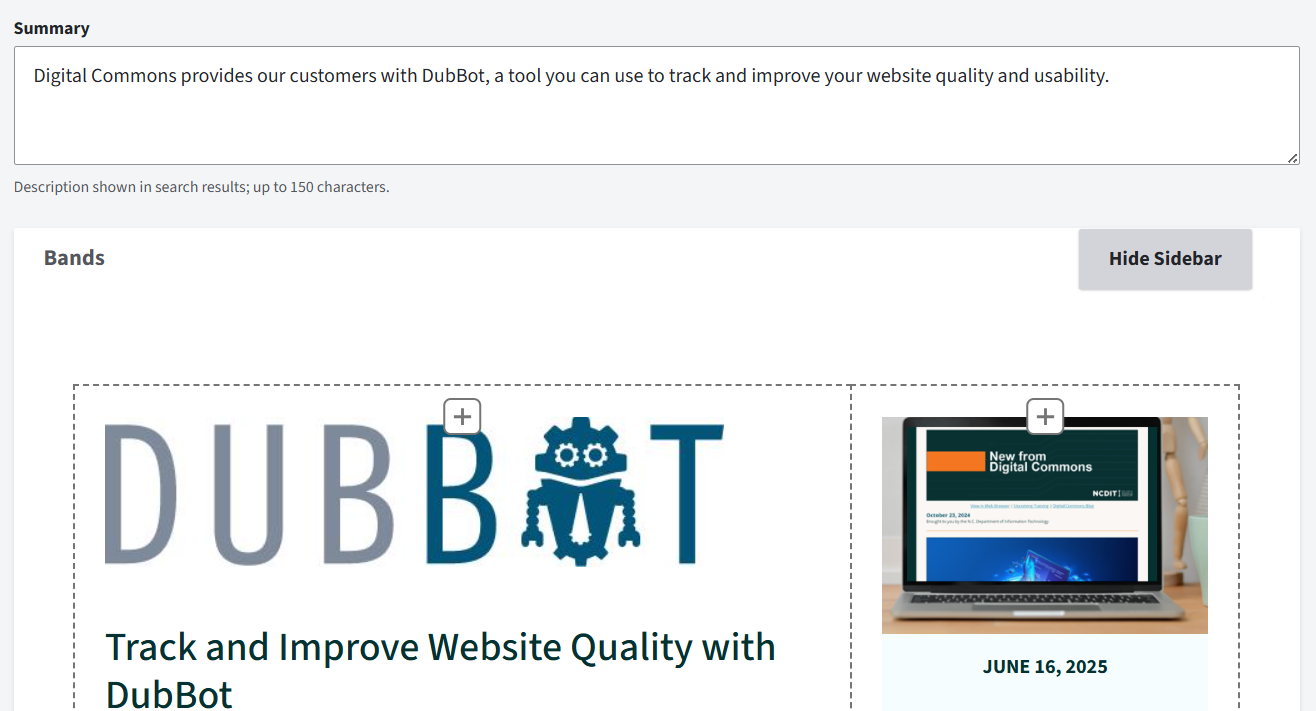
The Summary reads: Digital Commons provides our customers with DubBot, a tool you can use to track and improve your website quality and usability. Search Results
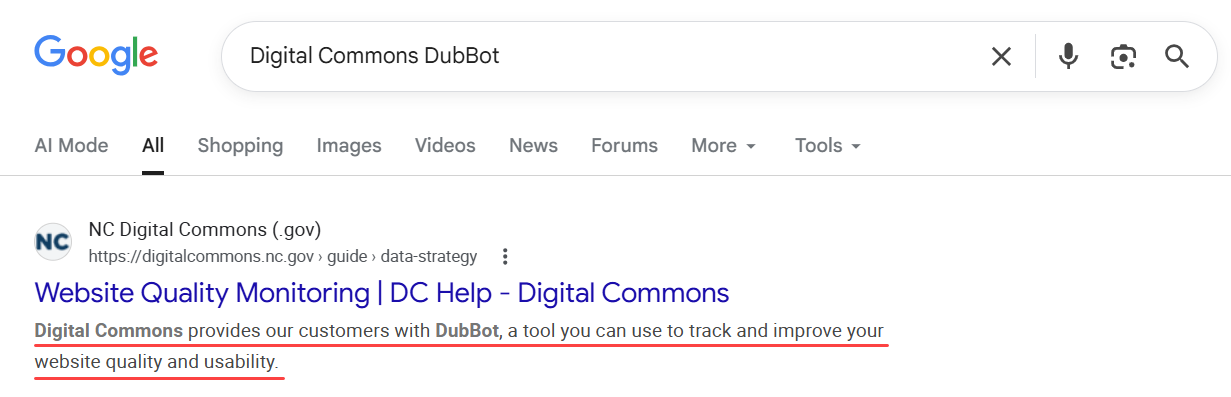
Underlined in Red: The deliberate description provided in the Summary field displays in the search engine results. Public Experience
The Summary for a Landing Page does not display on the page; it only displays in search results.
Example: Website Quality Monitoring